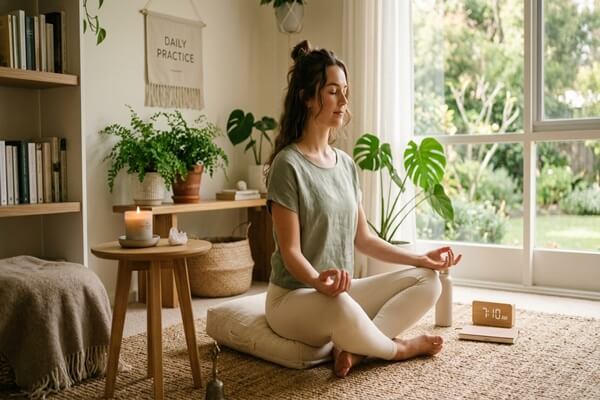
10 Minute Daily Meditation Routine for Inner Peace
Most people don’t struggle with meditation because it is hard. They struggle because it feels unclear, slow, or disconnected from real life. You sit down, close your eyes, and within seconds your mind starts racing. That’s where most give up.
But inner peace is not something you chase. It’s something you build, one small habit at a time.
A 10 minute daily meditation routine works because it removes pressure. It fits into real schedules. And more importantly, it trains your mind gently instead of forcing it.
This guide is not theory. It’s a practical system you can follow daily without confusion.
Why a 10 Minute Meditation Routine Actually Works
Long meditation sessions sound impressive, but they are not necessary for beginners or busy people.
Your brain responds to consistency more than duration.
When you meditate for just 10 minutes daily:
- Your mind learns to slow down naturally
- Stress reduces gradually, not suddenly
- Focus improves without forcing discipline
Short sessions also remove excuses. You don’t need a special room, music, or hours of free time.
Ten minutes is small enough to start. Powerful enough to change your mental state.
What Inner Peace Really Means
Inner peace is not about having zero thoughts.
It means:
- Your thoughts don’t control you
- You respond instead of reacting
- You feel stable even when life is busy
Meditation builds this state slowly.
Think of it like strengthening a muscle. You don’t see results on day one. But after a few weeks, your reactions change. Your patience improves. You stop overthinking small things.
That’s real inner peace.
Preparing for Your Daily Meditation
You don’t need anything fancy.
Just follow three simple rules:
Choose a fixed time
Morning is best because your mind is fresh. But evening also works if you stay consistent.
Pick a quiet spot
It doesn’t have to be silent. Just avoid interruptions.
Sit comfortably
You don’t need a special posture. Sit on a chair or floor. Keep your back straight but relaxed.
Avoid lying down. It often leads to sleep instead of awareness.
The 10 Minute Daily Meditation Routine Step by Step
This routine is designed to be simple and repeatable. Follow the same steps every day so your brain forms a habit.
Minute 1 to 2: Settle Your Body
Sit down and close your eyes.
Take a deep breath in through your nose. Hold for a second. Then slowly breathe out.
Do this 3 to 4 times.
This step signals your brain that you are slowing down.
Minute 3 to 5: Focus on Your Breath
Now return to normal breathing.
Pay attention to:
- Air entering your nose
- Air leaving your body
Don’t change your breathing. Just observe it.
Your mind will wander. That’s normal.
Each time it happens, gently bring your focus back to your breath.
This is the core of meditation.
Minute 6 to 8: Observe Your Thoughts
Now shift your awareness slightly.
Let your thoughts come and go.
Don’t fight them. Don’t follow them.
Just notice:
- What thoughts appear
- How they disappear
Imagine you are watching clouds in the sky.
This step trains detachment.
You learn that thoughts are temporary.
Minute 9 to 10: Create a Calm Ending
Take one deep breath again.
Bring your attention to your body.
Feel:
- Your hands
- Your legs
- Your breathing
Before opening your eyes, say silently:
“I am calm. I am in control.”
Then slowly open your eyes.
What You Should Feel After Meditation
Don’t expect instant silence or happiness.
Instead, notice small changes:
- Slight calmness
- Slower thinking
- Less tension
These are real signs of progress.
Meditation works like compound interest. The results grow over time.
Common Mistakes That Block Inner Peace
Many people quit meditation because of wrong expectations.
Let’s fix that.
Expecting zero thoughts
Your mind will think. Meditation is about observing, not stopping.
Trying too hard
Forcing focus creates stress. Stay relaxed.
Skipping days
Consistency matters more than perfection.
Judging yourself
There is no “good” or “bad” meditation session.
Every session counts.
Best Time to Practice Meditation
Morning is ideal.
Your mind is quiet, and your thoughts are not overloaded yet.
Meditating in the morning helps you:
- Stay calm throughout the day
- Handle stress better
- Improve focus
Evening meditation helps release stress from the day.
Choose what works, but stay consistent.
How Long Before You See Results
This is where most people get impatient.
Here’s what actually happens:
After 3 days
You feel slightly relaxed during sessions
After 1 week
You notice better focus
After 2 to 3 weeks
Your reactions become calmer
After 1 month
You start feeling real inner stability
The key is not to skip.
How to Make Meditation a Daily Habit
Habit is the real goal.
Here’s how to make it stick:
Start small
Never increase time suddenly
Attach it to an existing habit
Meditate after brushing or before sleep
Use a timer
Avoid checking your phone
Track your progress
Mark each day you complete
Consistency builds identity.
You stop saying “I try meditation” and start saying “I meditate daily.”
Guided vs Silent Meditation
Both work.
Guided meditation helps beginners because:
- It gives direction
- Reduces confusion
Silent meditation is deeper but requires practice.
Start with simple breath awareness. You don’t need apps unless you feel lost.
Can Meditation Really Reduce Stress and Anxiety
Yes, but not instantly.
Meditation changes how your brain reacts.
Instead of reacting quickly, you pause.
That pause creates control.
Over time:
- Stress reduces
- Anxiety becomes manageable
- Your mind feels lighter
This is why even 10 minutes daily matters.
Meditation for Busy People
If you feel you don’t have time, that’s exactly why you need it.
Ten minutes is less than:
- Social media scrolling
- Random phone usage
- Unnecessary thinking
Meditation saves time by improving clarity.
You make better decisions. You waste less energy.
Advanced Tip: Add Awareness in Daily Life
Meditation is not limited to sitting.
You can practice awareness while:
- Walking
- Eating
- Working
Just stay present.
Notice what you are doing without distraction.
This strengthens your meditation habit faster.
Final Thoughts
A 10 minute daily meditation routine is not about perfection. It’s about showing up every day.
Some days your mind will be calm. Some days it will be chaotic.
Both are part of the process.
Inner peace is not something you find in one session.
It grows slowly through consistency.
If you follow this routine daily, you will notice real change. Not just during meditation, but in how you think, react, and live.
Start today. Keep it simple. Stay consistent.
That’s all you need.