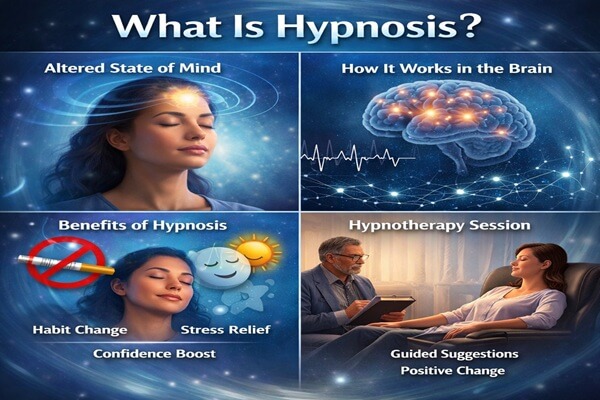
Hypnosis feels strange until you realize you have already experienced it. That feeling when you drive home and cannot remember the last few miles. Getting lost in a good movie where the outside world fades away. Staring at a flame or listening to rain until your mind goes somewhere else entirely. That focused, trance like state is hypnosis. It is a natural ability every human brain possesses. You do not need a swinging watch or a stage show to get there. You just need to understand how your own mind works.
Many people think hypnosis is sleep or unconsciousness. That is not correct. Hypnosis is actually a state of focused attention. Your awareness narrows. The usual chatter in your head becomes quiet. In that moment, you become more open to suggestions. Not because someone controls you. Because your conscious mind stops arguing with every new idea. The doubt and resistance that normally protect you take a break. That is why hypnosis works so well for changing habits, managing pain, and reducing anxiety.
Scientists have studied hypnosis for decades. The American Psychological Association officially defines it as a state of consciousness involving focused attention and reduced peripheral awareness. That fancy language simply means you tune out distractions and tune into one thing. The key feature is an enhanced capacity to respond to suggestions. Some people call this heightened suggestibility. But that word makes it sound weak or dangerous. In truth, it is a powerful tool for self improvement when used correctly.
The Natural Brain Science Behind Hypnotic States
Your brain does not need a hypnotist to enter this state. Watching television, playing video games, praying, reading, or running can all produce the same narrowed focus. Have you ever been so absorbed in a book that someone called your name and you did not hear them? That was a hypnotic state. The neurobiology is real. Brain scans show changes in activity during hypnosis. The dorsal anterior cingulate, which processes incoming information, becomes less active. That allows your subconscious to take over.
The connection between your executive control network and the insula, which controls body awareness, actually increases. This explains the powerful mind body connection people experience under hypnosis. You can literally change how you feel pain or anxiety by changing your focus. A 2016 Stanford study proved these brain changes happen consistently. Hypnosis is not imagination or wishful thinking. It is measurable, repeatable brain function.
Your subconscious mind runs most of your daily life. It holds every memory, habit, and automatic response you have ever learned. Your conscious mind thinks it is in charge. But the subconscious makes decisions on autopilot. That is why you bite your nails without thinking. Why you reach for comfort food when stressed. Why negative thoughts loop even when you want them to stop. Hypnosis gives you access to that deeper programming. You can rewrite the code instead of just fighting the symptoms.
The Truth About Stage Hypnosis Versus Real Hypnotherapy
Stage hypnosis gives the whole field a bad reputation. Magicians pick volunteers who are highly hypnotizable. They know some people respond to suggestions much more easily than others. Then they create a show. The magician claps his hands and says sleep. The volunteer falls backward. The crowd laughs and applauds. Everyone thinks the magician has special powers over the human mind.
Here is what the stage show does not tell you. Those volunteers are not asleep. They are not unconscious. And they are absolutely not under the magician’s control. Highly hypnotizable people accept suggestions because they want to participate. They enjoy the experience. At any moment, they could choose to stop. The magician has no real power over them. The entertainment industry has produced documented cases of distress from stage hypnosis. People feel embarrassed, violated, or convinced something is wrong with them. Some countries have banned stage hypnosis entirely because the risks outweigh any benefit.
Clinical hypnotherapy could not be more different. A properly trained hypnotherapist holds a degree in medicine, psychology, or mental health. They perform a careful assessment before ever inducing hypnosis. They want to understand your medical history, your symptoms, and your goals. The session happens in a private, safe environment. The therapist teaches you skills you can use on your own. Self hypnosis becomes the ultimate goal. You learn to help yourself anytime you need it.
Real hypnotherapy never involves sleep or loss of control. You remain fully aware of every suggestion. You can reject anything that does not feel right. The therapist acts as a guide, not a controller. Think of it like a gym trainer for your brain. They show you the exercises. But you are the one doing the work and getting stronger.
What Hypnosis Actually Feels Like From the Inside
People always ask what being hypnotized feels like. The answer surprises most of them. It feels ordinary. You feel deeply relaxed and completely present. Your eyes might be closed. Your breathing slows down. The constant mental noise of your day fades into the background. You are not asleep. In fact, you are more focused than usual. Every word from the therapist feels important. Your imagination becomes vivid and real.
Some people describe it as daydreaming with purpose. Others say it feels like the moment right before falling asleep, when you are still aware but deeply calm. Many compare it to being absorbed in a great movie or a gripping novel. The outside world drops away. Time might feel like it is moving differently. A twenty minute session can feel like five minutes or an hour depending on your state.
You will hear every suggestion clearly. Your mind will think creatively. Memories and images might float up on their own. Do not worry if that happens. It is just your subconscious participating. You can speak if you want to. You can move if you need to. Nothing about hypnosis traps you or locks you in place. You could stand up and walk out of the room at any second. Most people do not want to because the relaxation feels so good.
How Hypnotherapy Treats Real Medical and Mental Health Conditions
Hypnosis is not alternative medicine. It is evidence based clinical practice. Research proves hypnosis effectively treats both acute and chronic pain. The effect is strong enough that some experts now call hypnosis the first line treatment for pain. Think about that. Before powerful drugs with dangerous side effects, try hypnosis. Before surgery or injections, try changing how your brain processes pain signals.
Irritable bowel syndrome responds remarkably well to hypnosis. Studies show symptom improvement in most patients. The gut brain connection is real. Calming the brain calms the digestive system. Hypnosis for IBS has become so well established that some insurance plans cover it. Pain management remains the most researched application. But the list of proven benefits keeps growing.
Anxiety disorders improve with hypnosis. Sleep quality increases. People quit smoking successfully. Weight loss becomes easier when you address the subconscious drivers of overeating. Fear of medical procedures, dental work, or flying all respond to hypnotic techniques. Chemotherapy side effects like nausea can be reduced. Hot flashes from menopause become less intense. Even skin conditions like warts and psoriasis show improvement because of the mind body connection.
The common thread is self regulation. Hypnosis teaches your brain to change its own activity. Instead of reacting automatically to pain or fear, you learn to respond differently. You gain control over processes that normally run on autopilot. That is empowering. That is why patients report feeling calmer, more in control, and more relaxed after learning self hypnosis.
Separating Hypnosis Myths From Facts
The biggest myth is that hypnosis can make you do things against your will. That is simply false. Your values, morals, and core beliefs remain intact during hypnosis. No hypnotist can make you rob a bank, betray a secret, or act against your nature. Study after study confirms this. Hypnosis requires consent and cooperation. You are always the one driving the car. The hypnotist just reads the map.
Another common fear is getting stuck in hypnosis. People worry they will never wake up. That fear comes from stage shows where volunteers appear to sleep. In reality, no one has ever been stuck in hypnosis. You naturally come out of the state when the session ends. If the therapist stopped talking, you would simply open your eyes. The same way you come out of a daydream or finish a movie. Your brain knows how to return to normal waking awareness automatically.
Some people believe they cannot be hypnotized. They say their mind is too strong or they have too much willpower. That belief misunderstands what hypnosis is. Hypnotizability exists on a spectrum. Some people respond easily and deeply. Others respond more subtly. But almost everyone can experience some level of hypnosis. It is a natural human ability. The people who think they cannot be hypnotized are often the ones who try too hard to control the experience. Relaxing and letting go is the actual skill.
How to Know If Hypnosis Could Help You
You might benefit from hypnosis if you feel stuck. That stuck feeling happens when your conscious mind wants change but your subconscious keeps running old programs. You know you should stop procrastinating but you do it anyway. You want to feel confident but anxiety keeps showing up. You try to sleep but your brain will not shut off. Hypnosis works well when effort and willpower have failed.
People with repetitive negative thoughts find relief. Those who sabotage their own success learn why and how to stop. Chronic pain sufferers gain tools to reduce suffering without more medication. Anyone preparing for surgery or medical procedures can reduce anxiety and speed recovery. Students and athletes use hypnosis to enhance focus and performance. The applications are broad because the mechanism is basic. Hypnosis helps your brain get out of its own way.
You should not use hypnosis if you have certain psychiatric conditions like psychosis. A qualified hypnotherapist will screen for these contraindications. That is why proper credentials matter. A lay hypnotist without medical training cannot make that judgment safely.
Finding a Real Hypnotherapist and What to Expect
A legitimate hypnotherapist holds a license in medicine, nursing, psychology, social work, or counseling. They have graduated from an accredited university. Their hypnosis training adds to an existing foundation of diagnostic and therapeutic skills. They know when hypnosis is appropriate and when to refer you to another specialist. Look for credentials like MD, DO, PhD, PsyD, LCSW, LMFT, or RN with additional hypnosis certification from a reputable organization.
Avoid lay hypnotists who promise to cure serious conditions without a medical license. They lack the training to diagnose what is actually wrong. They might miss something serious. A responsible hypnotherapist works alongside your doctor. They communicate about your care. They never claim to replace medical treatment.
A typical first session lasts sixty to ninety minutes. The therapist takes a detailed history. They explain exactly how hypnosis works and answer your questions. Then they perform a hypnotic induction. That is the procedure that guides you into the state. Induction might involve progressive muscle relaxation, counting, visualization, or simply asking you to focus on your breath. Nothing magical or mysterious happens.
Once you are in hypnosis, the therapist makes suggestions tailored to your goals. For pain, they might suggest numbness or a cooling sensation. For anxiety, they might guide you to a safe, calm place in your imagination. For habit change, they might link the unwanted behavior to an unpleasant feeling and the new behavior to relief and pride. The suggestions work because your subconscious accepts them without the usual resistance.
The therapist then brings you back to full waking awareness. You will remember everything. You will feel relaxed and often energized. Most people notice some improvement after the first session. But lasting change usually requires multiple sessions and practice with self hypnosis at home.
Learning Self Hypnosis for Lifelong Benefits
The ultimate goal of hypnotherapy is teaching you self hypnosis. You learn to induce the state on your own. You learn which suggestions work best for your particular challenges. Then you practice regularly, just like exercise. The benefits compound over time.
Self hypnosis starts with finding a quiet place where you will not be interrupted. Sit or lie down comfortably. Close your eyes. Take a few deep breaths. Focus your attention on one thing, like the feeling of breathing or a spot on the wall. Count backwards slowly from ten to one, suggesting deeper relaxation with each number. Once you feel the shift, give yourself the suggestions you need. I am calm. My pain is fading. I easily resist the urge to smoke. Then count forwards from one to ten to return to full alertness.
Five minutes of self hypnosis can produce hours of relief. Patients report that just a minute or two changes their whole day. The more you practice, the easier and faster it becomes. Eventually, you can drop into a light hypnotic state in seconds just by taking a certain breath or thinking a certain word. That is the power of anchoring. You train your brain to associate a trigger with the hypnotic state.
Hypnosis does not fix everything overnight. But it gives you a tool you can use for the rest of your life. No prescription refills. No appointments needed. Just your own mind learning to work better for you instead of against you. That is what makes hypnosis so valuable. It puts the power back where it belongs. In your hands.